Aroma del vino
The aromas of a wine are an essential part of enjoying it and recognising its flavours and nuances. It is impossible to understand the pleasure of a wine without its aromas.
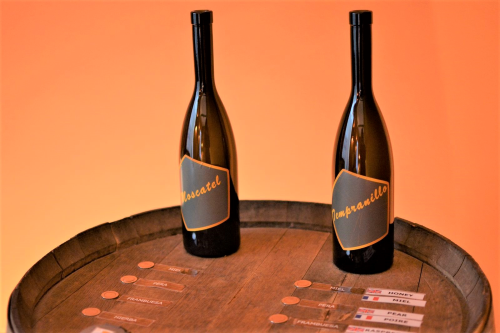
In this section we will delve into the world of oenology, but in a very simple way. How? By playing. You have two barrels in front of you with four grape varieties: Albariño, Verdejo, Moscatel and Tempranillo. In front of them there is an aroma guide who has to guess which aroma predominates in each grape variety. The procedure for this game is the same as always in the museum: smell, choose one of the options and press the button to see the correct answer. If the bottle lights up, it means that you have got it right and you have learned that the grape variety has that aromatic nuance.
We suggest that the day you drink a wine from one of these grape varieties, try to recognise the aromas you have just learned.
Oenological visit:
In the pantry, we find fruits such as pear, which are mostly found in white wines and are known in white fruit aromas. It is an aroma that harmonises with vanilla in barrel-aged white wines and is usually found in wines of the varieties Albariño, Chenin Blanc, Viura and Chardonnay. Raspberry, which like all fruits is a primary aroma, is also very common in red wines made with varieties such as Pinot Noir, Tempranillo, Cabernet Franc and Syrah. It is a classic feature of Ribera del Duero, Chinon, Tuscany and some Burgundies.
We also find the aroma of grass in this pantry. Aroma of primary origin very present in wines with Verdejo and Sauvignon blanc grapes, so it is common in wines from New Zealand or Sanser and Poli-fume, as well as in white wines from Rueda.
The description of the honey aroma can be found in point 4 of the table lying down.
Posters:
What do wine aromas depend on (Enrique Calduch)?
The best way to distinguish, remember and enjoy a wine is by smell. Sight provides information and the mouth recognises textures, temperatures and only four flavours (acid, bitter, salty and sweet). Nothing more. The rest of the virtues and defects of a wine are perceived by the nose.
Wine is a living being that is born, grows, ages and dies. When it is young, it must show the virtues of youth, that is to say, it must be cheerful, intense and direct. It should smell of fresh fruit, of blackberries and plums for reds, strawberries and raspberries for rosés, apples and pears for whites, with the whole range of fruits allowed. Herbs and flowers also make their appearance, as well as the specific characteristics of the family from which the young wine comes, which strongly characterise it, i.e. the grape variety and the soil in which it was born.
If it is a more mature young wine, on its way to maturity, it will have gone through a process of formation or maturation. The time spent in the forest will have transformed it. The fruit will now be riper, aromas of vanilla, cocoa, coffee and toasted flavours will emerge. The characteristics of its origin, the balsamic, liquorice, bush and mineral notes will increase.
After some time, the wine will have reached maturity. It is a serious gentleman in the fullness of its life, after its maturation and the peace and wisdom that comes with time. Well-formed, it will be complex and elegant, the fruit will have faded or will appear very compote-like, to be replaced by spices, cedar, cigar box...
When it is very old, it will be a venerable old man, with experience, memories, advice. Someone to sit with and slowly savour his wisdom. The muted and refined aromas, the spices and the memory of those compotes and the clean leather look are already dominant.
When an aficionado stands in front of a wine, he has to decide according to the moment, the season or the company. He may prefer to spend time with a cheerful, friendly teenager who makes him laugh; or with a serious, polite gentleman who offers an in-depth conversation; or with an older man with experience and history who makes him think. Always enjoy the moment.
Comentarios
Aún no hay comentarios.