Bienvenida
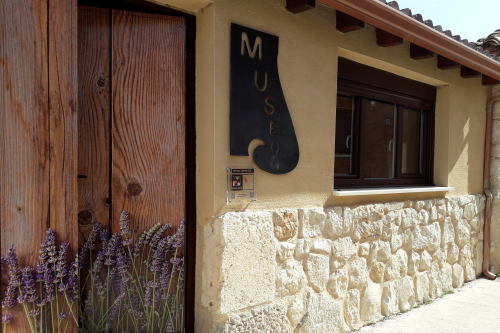
You are in the first and only museum of aromas in Spain and Europe.
A recreational and informative centre where you can enjoy our sense of smell.
A collection of 92 aromas to enjoy, remember and learn.
This museum was designed and decorated by craftsmen and theatrical scenographers. It is a two-storey house with the garden, kitchen, living room, bedroom, bathroom and cellar. These rooms are the 6 zones of the museum.
Why the Aroma Museum?
Because the senses bring us into contact with nature, with others, with life, bridging cultures and distances, taking us back in time in a surprising way, bringing our past to mind and reliving it. But there is one sense that we cannot do without, the one that is related to breathing, the sense of smell, which, except in exceptional cases, allows us to smell every time we breathe, and yet it is the mute sense.
Each person has a greater or lesser tolerance towards a smell, and this fact even changes over time. The distinction between good and bad smells varies according to customs, societies and individual experiences.
Smell and smells are the common thread that will lead us to a better understanding of the relationship between science and perception, why it has historically become a relegated sense, close to animality (nutrition, hunting, sex) and why sight is acquiring greater prominence.
Our sensory perception has been transforming over time from a greater olfactory richness to deodorisation.
Information:
- We smell by lifting the covers of the aromines, approaching the nose at a certain distance, being careful not to touch with it, because the aroma will be impregnated and we will drag it, in case of touching we recommend to wash ourselves in the toilet to eliminate the smell.
- We will use the coffee to smell it during the visit to neutralise the aromas that we will encounter. We recommend smelling the coffee in between the different aromas and to carry out the visit calmly, resting, reading the texts, to avoid saturation of our sense of smell.
- You can take photos, but please tag us on social networks.
- Ask any questions you may have to the museum guide.
Wine tour:
We will walk through the museum, smelling aromas that we can find in wine, a work carried out by Pilar Cruces from Lust for Wine.
Learning to recognise the aromas of wine will help you to enjoy it more, it will bring you closer to its origins and you will associate them with your emotions.
Wine develops certain aromatic precursors during the entire winemaking process, from the grapes in the vineyard, through the fermentation processes, to the ageing process.
We classify the different aromas into three groups:
- Primary aromas: These aromas are defined by the grape variety, the land in which it is planted, the climate and the composition of the soil.
They are especially present in young wines. They can be found in the following olfactory families: floral (violet, rose, jasmine, orange blossom...), vegetal (grass, truffle, thyme, laurel, mushrooms...), fruity (pear, raspberry, citrus, almond...), balsamic (mint, eucalyptus...) and spicy (pepper, clove, nutmeg...).
- Secondary aromas: These are those that appear as a consequence of the alcoholic and malolactic fermentation, they come from the action of yeasts and lactic bacteria. They are usually sweet and include aromas of fermentation (yeast, pastry, bread...), dairy products (milk, yoghurt, butter, cream...).
- Tertiary aromas: These are those that are acquired during the ageing of the wine, either in barrels or in ceramic amphorae, cement, etc. And its subsequent maturation in the bottle. At this stage we can find a great complexity of aromas. Here we find floral-vegetable (truffles, mushrooms, camomile...), woody, balsamic and toasted (eucalyptus, liquorice, wood, incense, cinnamon, pine...), animal (leather, musk...), empyreumatic (chocolate, coffee...) and confectionery (honey...).
The aromas of wine as we can see are present in all the aromatic families, so we have identified them throughout the museum with the letters P (primary), S (secondary), T (tertiary).
THANK YOU FOR YOUR VISIT, ENJOY YOUR VISIT!
Comentarios
Aún no hay comentarios.