Aromas de la Naturaleza
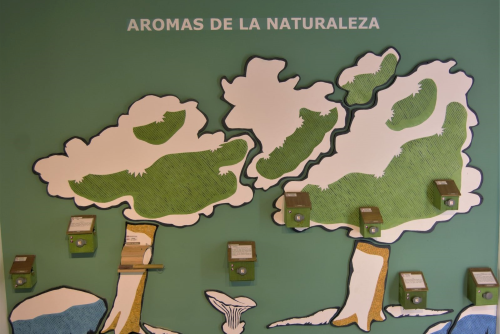
In this area we will find different aromas of nature: plants such as fennel, trees such as pine, cypress, juniper or oak.
Also fungi such as:
- Truffle: This mysterious aromatic fungus grows underground, about 15 to 20 centimetres deep. The black truffle is the most appreciated for its delicate, intense flavour and refined aroma. In the Middle Ages, it was considered to have something demonic about it, being an offering for nobles and kings.
- Chanterelle or St. John's mushroom: It could be said that there are more than 15,000 varieties in the world. Mushrooms are the fruit of a plant that lives in the soil of wooded areas, its tiny roots or filaments form what is called thallus or mycelium, and when the climate is suitable, the mushroom sprouts from these roots. In addition to their culinary uses, some mushrooms are prized for their healing properties. For example, penicillin comes from a small fungus called "penicilium".
In third position starting from the left, we find the wood of the cedar of Lebanon, to smell it we have to sand the wood until sawdust comes out and smell that sawdust, what does it smell like? It smells like wood no.... Let everyone draw their own conclusions...
Now look at the little box on the right, it's Pretichor's scent, try to recognise his scent, what does it remind you of?
PETRICHOR: What would you call that fragrance left by the rain after a hot, dry period, that smell of "wet earth"?
Its discoverers called it petrichor (Bear and Thomas, 1966), which means "essence of rock" and concluded that the smell of rain did not come from spores or bacteria on the ground but directly from the rocks and soil. These are chemical compounds in the form of yellowish oils trapped in rocks and soil, which are released by precipitation or high moisture contents in the environment and presage the arrival of rain.
Oenological visit:
Nature is present in the aromas of wine, after all wine comes from grapes and is often aged in wooden barrels and casks. For example:
Petrichor is a primary aroma. It is reminiscent of wet earth, but it should not be confused with the defect caused by the Geosmina bacteria. In this case we refer to a primary aroma characteristic of wines from Burgundy, Piedmont and some areas of Galicia such as Monterrey.
The chanterelle can be primary and tertiary, with marked notes of wet earth. It is usually found in wines from Piedmont, in red wines from Burgundy and in the best Galician red wines.
Fennel is a primary aroma that gives an aniseed touch and is present in white varieties such as Verdejo, Godello, Viognier.
Oak is a tertiary aroma, coming from the ageing of wines in wooden barrels or casks. Its intensity in wines will vary depending on the time spent in the barrel or cask, whether it has been more or less toasted, and whether it is new or more or less used.
Truffle is a tertiary aroma. It comes from ageing in oak barrels or develops during bottle ageing. It is characteristic of great red wines, such as Bordeaux, Burgundy, Barolo, Brunello de Montealchino and Galician reds such as Merenzao from Ribeira Sacra.
The aromas of pine, cypress or juniper, although we find them in this room, in the world of wine we are going to classify them in the balsamic family, their description can be found in locution number 3 referring to the kitchen.
Posters:
The human nose is a fantastic instrument for discovering our environment.
Smell brings back memories and quickly grips our emotional system, and even in the absence of a precise language to codify smells, it enriches the interpretation we make of the real.
Smell, the good sense of smell that belongs to our animal side, was relegated to the background when man stood up. He left in the background the possibility of inventing reality.
Learning to follow our good sense of smell or "instinct" whoever we are and wherever we go will make us more alive.
Here are some of nature's aromas accompanied by the following explanatory texts:
Truffle: This mysterious aromatic fungus grows underground, about 15 to 20 centimetres deep. The black truffle is the most appreciated for its delicate, intense flavour and refined aroma. In the Middle Ages, it was considered to have something demonic about it, being an offering for nobles and kings.
Chanterelle or St. John's mushroom: It could be said that there are more than 15,000 varieties in the world. Mushrooms are the fruit of a plant that lives in the soil of wooded areas, its tiny roots or filaments form what is called thallus or mycelium, and when the climate is suitable, the mushroom sprouts from these roots. In addition to their culinary uses, some mushrooms are prized for their healing properties. For example, penicillin comes from a small fungus called penicilium.
PETRICHOR: What do you call the fragrance that rain leaves behind after a hot, dry spell, the smell of "wet earth"?
Its discoverers called it petrichor (Bear and Thomas, 1966), which means "essence of rock" and concluded that the smell of rain did not come from spores or terrestrial bacteria but directly from the rocks and soil. These are chemical compounds in the form of yellowish oils trapped in rocks and soil, which are released by precipitation or high moisture contents in the environment and which presage the arrival of rain.
Comentarios
Aún no hay comentarios.