Fisiología del Olfato
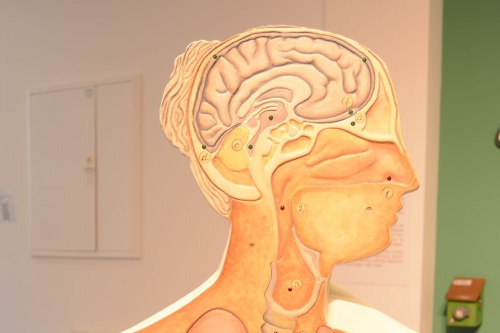
This is an anatomical model of the human body in which we can learn a little more about the Respiratory System and the Sense of Smell.
By pressing the buttons next to each of the labels, we can see the path of the olfactory molecule in the brain in green and that of the oxygen molecule along the respiratory system in red.
At this point we realise that we can no longer stop breathing... we can no longer stop smelling!
The relationship between smell and breathing is indissoluble since, when we breathe, the airborne molecules emitted by the substances that produce odours also enter our noses, given their volatility, travelling through the air just like the oxygen molecules.
In the following, we will explain two routes:
A) Air to obtain oxygen: Respiratory system.
B) Air molecules that produce odours: Sense of smell.
A. RESPIRATORY SYSTEM
The main function of the respiratory apparatus is to obtain oxygen from the air and to expel carbon dioxide produced by cell metabolism. This is made possible by a process known as ventilation, a cyclical process consisting of two stages: inspiration (air entering the lungs) and expiration (air leaving).
The airways communicate the outside world with the lungs, which are the organs responsible for this function. With each inspiration, the incoming air passes through the nostrils (1) where it is warmed and humidified and then continues its journey through the pharynx (2), larynx (3), trachea (4), bronchi (5) until it reaches the alveoli (6) deep in the lung tissue (7). In the alveoli, gas exchange between air and blood takes place through a process of passive gas diffusion, which tends to equalise the concentration on either side of the alveolar-capillary membrane.
On expiration, the oxygen-depleted and carbon dioxide-laden air is expelled to the outside.
B. SENSE OF SMELL
When breathing in, scent molecules enter the nose and pass through a small area of tissue called the olfactory membrane (zone a), which is very small and located in the upper part of the nasal cavity. In this membrane there are numerous receptor cells considered to be extensions of the brain itself, each receptor cell being sensitive to the reception of each particular molecule. Once the molecule-receptor cell association is made, a nerve impulse is produced which will go to the brain via a bone in the forehead called the lamina cribrosa, under which are the olfactory bulbs (area b) where the nerve impulse will have its first connection with the brain. In the olfactory bulb are structures called glomeruli, with the function of distributing the converging nerve stimuli in an orderly fashion to the brain. In the brain, the impulses are distributed to different areas for decoding and odour perception, with the information first reaching the limbic system (area c) and the hypothalamus, both brain regions responsible for emotions, feelings, impulses and instincts. These regions also store the content of memory, which is why smells can modify our behaviour and bodily functions. Only later does some of the odour information reach the cerebral cortex (area d) and become conscious, and the human brain can identify thousands of different smells.
The sense of smell is one of the most important virtues of the human body.
Wine tour:
Smell is the most sensitive sense linked to memory and emotions, which is why wines evoke and inspire. But we do not all perceive aromas in the same way, since in addition to the different thresholds of perception of each one, we also depend on our olfactory memory, since we cannot recognise aromas that we have never smelled. Our personal tastes will also affect this perception, either by philia or phobia of them.
Comentarios
Aún no hay comentarios.