04. Acceso a la Sala de Oración - Puerta de las Palmas
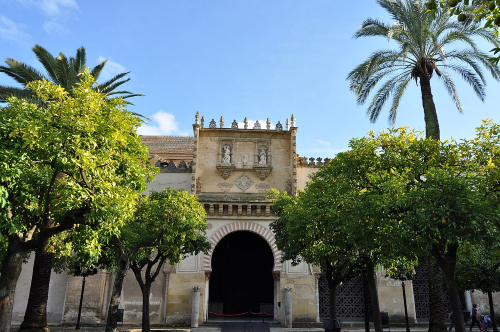
Ante ti se abre la Puerta de las Palmas, uno de los accesos principales a la antigua sala de oración de la mezquita y, al mismo tiempo, uno de los puntos más importantes de todo el recorrido. Este lugar marca un momento clave, no solo en términos de desplazamiento, sino también en la experiencia del espacio, porque es aquí donde se produce el paso definitivo entre el exterior y el interior, entre el ámbito abierto del patio y el espacio construido que define el corazón del edificio.
Hasta ahora has recorrido el Patio de los Naranjos, un espacio abierto, luminoso, organizado en torno a la vegetación, al agua, al aire libre, donde la luz natural y la disposición ordenada de los elementos generaban una sensación de calma, de equilibrio, de preparación. Todo en ese entorno estaba pensado para acompañar, para introducir, para crear una transición progresiva. Sin embargo, al situarte frente a esta puerta, percibes ya que estás a punto de entrar en un ámbito completamente distinto, donde la arquitectura adquiere un protagonismo absoluto y donde la percepción del espacio cambia de manera clara y profunda.
La Puerta de las Palmas, como otros elementos del conjunto, ha sido transformada a lo largo del tiempo, especialmente tras la etapa cristiana, cuando el edificio se adapta a su nueva función como catedral. Aun así, mantiene su papel esencial como punto de conexión entre el patio y la sala de oración, conservando su importancia dentro de la organización del conjunto. No es una puerta cualquiera, es un elemento que articula el recorrido, que marca un antes y un después, que define el paso entre dos formas de entender el espacio.
Antes de cruzar, merece la pena detenerse unos instantes y observar con calma el contraste que se genera entre ambos lados. Detrás de ti queda el patio, con su amplitud, con su luz, con su relación con el exterior. Frente a ti, el interior aparece más oscuro, más denso, más estructurado. Esta diferencia no es casual, no es simplemente una consecuencia de estar dentro o fuera, sino que forma parte de una concepción muy precisa del espacio, en la que el acceso al ámbito de oración debía implicar un cambio progresivo en la percepción.
En la arquitectura islámica, este tipo de transiciones son fundamentales. El paso de un espacio abierto a uno cerrado, de la luz al interior más contenido, de lo natural a lo construido, no se produce de forma abrupta, sino que está cuidadosamente pensado para preparar al creyente. No se trata solo de entrar en un edificio, sino de entrar en un estado distinto, en una disposición diferente, más recogida, más concentrada, más orientada hacia la experiencia espiritual.
Este umbral, por tanto, no es solo físico, es también sensorial. La luz cambia, el sonido se modifica, la temperatura puede variar, la sensación de amplitud se transforma. Todo ello contribuye a generar una experiencia que acompaña el paso del exterior al interior, creando una transición que es tan importante como el propio espacio al que se accede.
Al mismo tiempo, este punto adquiere una nueva dimensión tras la transformación cristiana del edificio. La reorganización del interior, la incorporación de nuevos elementos, la inserción de estructuras propias de la catedral, modifican la forma en que se percibe este acceso. La puerta sigue siendo el lugar de paso, pero ahora conecta no solo el patio con la antigua sala de oración, sino con un conjunto más complejo, donde conviven distintas etapas y distintos usos.
Si te fijas en los detalles, podrás apreciar esa superposición de épocas. En los materiales, en las formas, en la propia configuración de la puerta, se pueden leer distintas intervenciones, distintos momentos históricos que han ido dejando su huella. Este es uno de los aspectos más interesantes de la visita, la posibilidad de entender el edificio como una suma de capas, como una construcción que ha ido evolucionando sin borrar completamente lo anterior.
Es importante también observar cómo esta puerta se integra dentro del conjunto, cómo se relaciona con el patio, cómo se abre hacia el interior, cómo articula el recorrido. No es un elemento aislado, forma parte de una secuencia, de una experiencia que ha sido cuidadosamente construida.
Si permaneces unos segundos en este punto, puedes percibir cómo se produce esa transición, cómo la mirada se adapta, cómo el cuerpo se prepara para entrar en un espacio diferente. Este momento, aunque breve, es clave dentro del recorrido, porque marca el inicio de una de las experiencias más impactantes del edificio.
Al cruzar esta puerta, entrarás en la antigua sala de oración, uno de los espacios más sorprendentes de todo el monumento. La repetición de columnas, la sucesión de arcos, la profundidad visual, generarán una sensación completamente distinta a la que has experimentado hasta ahora. El espacio se multiplicará, se extenderá, creando un efecto casi hipnótico que define la identidad de este lugar.
Ese cambio no es inmediato en términos de comprensión, pero sí en términos de percepción. La arquitectura deja de ser un entorno abierto y se convierte en una estructura envolvente, en un espacio que te rodea, que se repite, que se prolonga. Es uno de los momentos más intensos de la visita.
Antes de entrar, toma un instante más para observar este umbral, para ser consciente del paso que estás a punto de dar. Este tipo de pausas ayudan a percibir mejor los cambios, a entender el recorrido no solo como un desplazamiento, sino como una experiencia.
Ahora, cruza la Puerta de las Palmas y adéntrate en el interior.
Comentarios
Aún no hay comentarios.